
Common Dental Problems In Adults Over 50
November 05, 2026
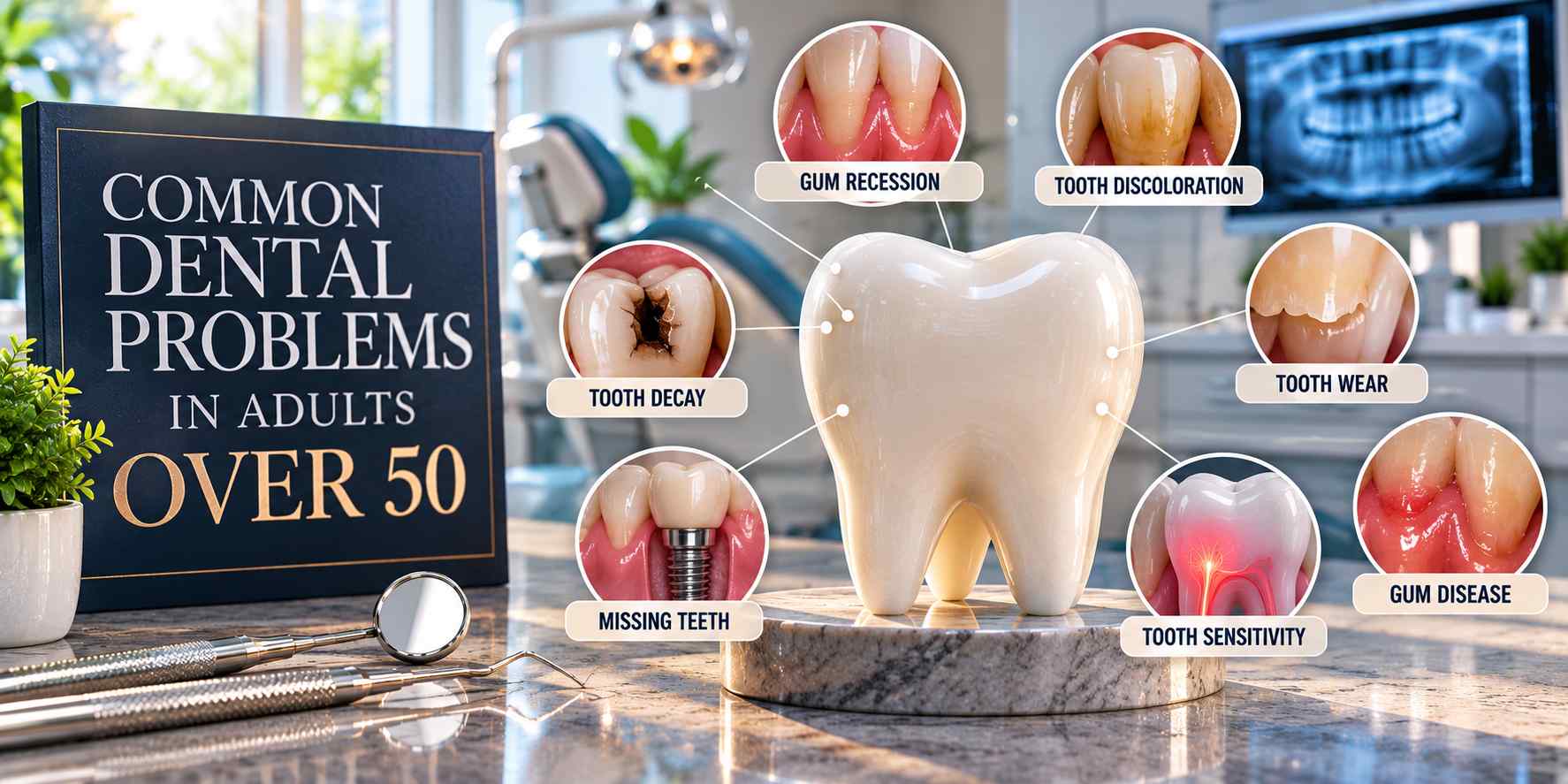
Turning 50 does not mean your teeth will automatically become unhealthy or that you will lose them. Many people keep their natural teeth for life, but oral health needs can change as you age. Years of chewing, past dental work, gum recession, medications, changes in saliva, and normal wear can lead to dental issues that may not have been noticeable before. Some of these problems develop slowly and may not cause much discomfort at first. At Simply Teeth, I encourage patients over 50 to watch for changes in their teeth and gums. Preventive care and early treatment can help keep your teeth comfortable, functional, and healthy.
Gum Disease Can Become A Greater Concern
Periodontal disease affects the gums and supporting structures around your teeth. Early signs may include bleeding while brushing or flossing, swollen gums, persistent bad breath, or recession.
One challenge with gum disease is that it often does not cause much pain. You might feel like everything is fine even as changes are happening in your gums.
As the condition progresses, supporting bone can be affected, and teeth may eventually become mobile. At your regular visits, I check your gum health and look for any changes that might need extra care. If you have gum disease, the treatment depends on how serious it is, not just your age.
Gum Recession Can Expose Tooth Roots
Do your teeth look longer than they used to? Your teeth are not actually growing; your gumline may be moving. When gums recede, parts of the tooth roots that were once covered become exposed. These root surfaces do not have the same enamel as the tops of your teeth, so they can be more sensitive and more likely to get cavities.
Gum disease can cause recession, but it is not the only reason. How you brush, the position of your teeth, grinding, and other things can also lead to receding gums. Dr. Patel can evaluate why the recession is occurring and determine whether preventive or restorative treatment is appropriate.
Dry Mouth Can Increase Dental Risks
Saliva is an important part of your mouth’s natural defense system. It helps wash away food debris, lubricates oral tissues, and neutralizes acids produced by bacteria. Many medications can reduce saliva production. Because adults often take additional medications as they get older, dry mouth may become more noticeable after age 50.
A dry mouth can be uncomfortable and may contribute to bad breath, difficulty swallowing certain foods, and increased cavity risk. If your mouth frequently feels dry, tell me. I can evaluate your oral tissues and teeth and discuss ways to reduce the effects of dryness.
Root Cavities Can Develop
Cavities are not limited to children and young adults. When gums recede, exposed root surfaces can become vulnerable to decay. This type of cavity may develop near the gumline and can progress without causing significant pain initially.
Changes in saliva production, diet, oral hygiene, and medication use may also affect cavity risk.
Regular examinations allow me to look carefully at exposed root surfaces and other areas where decay may be developing before you become aware of a problem.
Older Fillings And Crowns Can Begin To Wear
Dental restorations can last for many years, but they are exposed to substantial forces every day.
A filling placed decades ago may eventually wear, fracture, or develop changes around its edges. Crowns can chip, loosen, or develop problems involving the underlying tooth.
Older dental work does not automatically need replacement simply because of its age. I evaluate the restoration itself, the surrounding tooth structure, your bite, and whether there are signs of deterioration. When a restoration remains healthy and functional, replacement may not be necessary.
Teeth Can Become Worn Or Cracked
Years of chewing naturally place stress on your teeth. Grinding and clenching can increase those forces considerably. You may notice flattened chewing surfaces, small fractures, sensitivity, chipped enamel, or changes in your bite. Sometimes a crack produces discomfort only when you bite a certain way or drink something cold.
Not every crack requires the same treatment. Some may be monitored, while others require a filling, crown, root canal treatment, or another approach depending on their depth and location.
I recommend having new biting pain or unexplained sensitivity evaluated.
Frequently Asked Questions About Dental Problems In Adults Over 50
Do Teeth Naturally Become Weaker After Age 50?
Your teeth do not suddenly become weak when you turn 50. However, cumulative wear, previous dental treatment, gum recession, dry mouth, grinding, and decades of exposure to acids and chewing forces can become more noticeable.
The condition of your teeth matters more than your chronological age. Some people in their 70s maintain healthy natural teeth, while younger adults may experience significant dental disease.
I evaluate your current oral health and risk factors rather than assuming age alone determines what treatment you need.
Why Am I Suddenly Getting More Cavities?
A change in cavity activity can have several explanations. Gum recession may expose root surfaces that are more susceptible to decay. Reduced saliva production can also increase risk, particularly when dry mouth is related to medication.
Changes in diet, snacking frequency, oral hygiene, or health can contribute as well.
If someone who rarely had cavities begins developing them frequently, I look for the reason the pattern has changed. Addressing the contributing factor may help reduce future decay.
Is Gum Recession Normal As I Get Older?
Gum recession becomes more common with age, but that does not mean it should automatically be ignored. Periodontal disease, aggressive brushing, tooth position, grinding, and other factors may contribute. Recession can expose sensitive root surfaces and increase the risk of root decay.
If your gumline is changing, I can evaluate the cause and recommend ways to protect the affected teeth and gums.
Schedule A Dental Appointment With Dr. Patel At Simply Teeth
Your dental needs can change after 50, but tooth loss, persistent pain, and uncontrolled gum disease should not be treated as unavoidable consequences of aging. Regular examinations give me an opportunity to monitor your gums, restorations, tooth surfaces, bite, and other changes while problems may still be easier to address.
At Simply Teeth, I provide family dental care focused on helping patients maintain healthy, comfortable, functional smiles throughout adulthood. To schedule a consultation with Dr. Patel, contact our dentist in Mount Prospect at Simply Teeth by calling us at 847-870-1111.
